Table of contents
It starts with a flashing light in the rear-view mirror, and within seconds most drivers are running a mental checklist: licence, registration, where to put their hands, what to say. Yet the most consequential moments of a traffic stop often hinge on details police do not spell out, from how they read your movements to what they can lawfully ask, and what you are not required to volunteer. With road enforcement stepping up in many jurisdictions, understanding the hidden mechanics of a stop can reduce risk, protect rights, and keep everyone safer.
The first 30 seconds decide everything
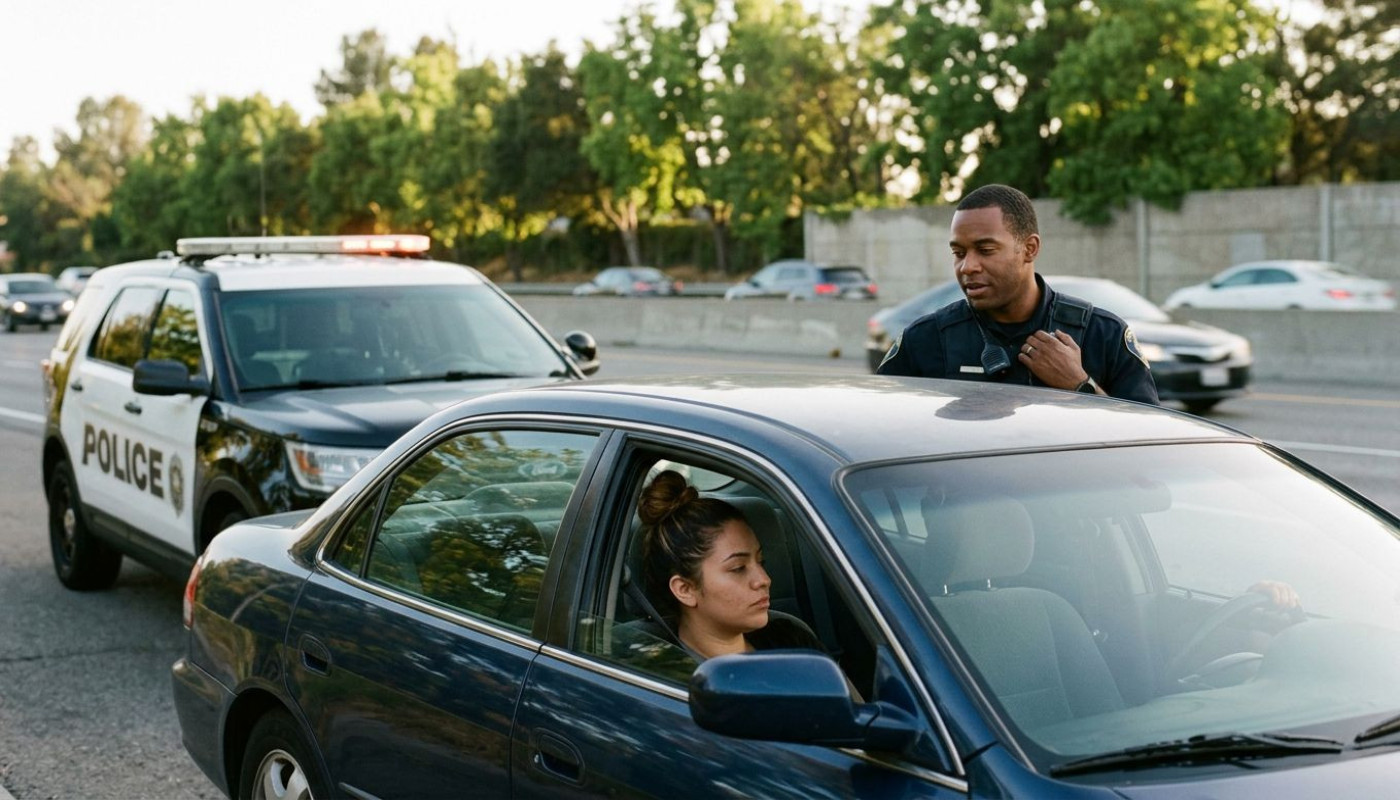
Do officers “make up their minds” immediately? Not in the simplistic sense, but the opening half-minute heavily shapes the rest of the encounter, and police training, like aviation and emergency medicine, tends to prioritise rapid threat assessment. Officers watch the vehicle’s braking pattern, the choice of pull-over spot, how quickly the cabin lights come on at night, and whether the driver leans, reaches, or rummages before the officer arrives at the window, because those movements can signal nerves, distraction, or in rarer cases an attempt to conceal items.
What rarely gets said out loud is that compliance is not only about stopping, it is about predictability. Signalling early, pulling to a well-lit shoulder, turning on hazard lights if it is dark or rainy, and keeping hands visible on the steering wheel can lower an officer’s risk perception. That matters because a high-risk perception changes everything: where the officer stands, how many questions come, whether backup is called, and how quickly the stop shifts from a routine check to a more formal investigation. If you need to reach for a wallet or a glovebox, saying so first, then moving slowly, can prevent misunderstandings that escalate an otherwise ordinary interaction.
There is also a practical reason officers may appear abrupt at the start: they are managing environment as much as the driver. Passing traffic is one of the most consistent dangers at the roadside, and police in many regions record serious injuries and deaths from vehicles striking officers during stops, which is why you may be instructed to move further forward, exit the car, or reposition. The instruction can feel officious, but it is often about line-of-sight, lighting, and creating a safer buffer from traffic flow, and your calm cooperation helps stabilise the scene.
Small talk isn’t small talk
“Do you know why I pulled you over?” sounds conversational, but it is often designed to elicit an admission, or at least to gauge whether the driver is attentive, impaired, or evasive. Many drivers reflexively answer with a guess, and that guess can become a piece of evidence if it amounts to acknowledging speed, phone use, or a traffic control breach. Officers may not frame it that way at the roadside, yet it can shape what goes into the notebook, what appears in a brief of evidence, and whether the matter stays an infringement or escalates.
Questions about where you are coming from, where you are headed, whether you have had a drink, or whether you are “in a hurry” can also serve multiple purposes at once. Some are welfare checks, some are impairment screening, and some are used to test consistency. If the driver’s story shifts, or if answers appear rehearsed, the officer may extend the stop, request a breath test where authorised, or look for additional grounds to proceed. None of this requires a driver to be rude or combative; it does suggest that careful, factual responses are safer than volunteering extra detail under stress.
Another rarely discussed element is that officers may interpret tone and posture as indicators of future risk. A driver who argues aggressively, interrupts, or steps out without being asked can raise the temperature instantly, even if the underlying offence is minor. By contrast, a driver who remains seated, keeps hands visible, listens, and asks clear questions tends to keep the interaction bounded. If you believe an allegation is wrong, the roadside is rarely the place to litigate it; the practical route is to comply, document details, and contest later through the proper process.
Consent searches hinge on a simple “yes”
One of the biggest misunderstandings in traffic stops is the difference between what police can require and what they can request. When an officer asks, “Do you mind if I have a look in the car?” many drivers hear it as an instruction, yet in numerous situations it is a consent request, and consent can open doors that would otherwise require legal thresholds. If you agree, the search may proceed without the officer needing to argue reasonable suspicion or other grounds later, because your consent becomes the bridge.
That does not mean police never have lawful authority to search without consent; powers vary by jurisdiction, and circumstances can create grounds. It does mean drivers should recognise the fork in the road: a polite refusal, expressed calmly, is different from obstructing police. Words matter, and so does demeanour. “I don’t consent to a search” is clearer than a nervous joke or an ambiguous “I guess so,” and clarity reduces the risk that an anxious moment is later characterised as permission.
Drivers also often underestimate how much can be learned without a search. Officers can observe what is in plain view, smell alcohol or drugs, notice open containers, or see items that raise questions. In-car cameras, body-worn video, and automatic number plate recognition can add context the driver may not realise is already on the officer’s screen, such as registration status, vehicle descriptors, and sometimes alerts. The operational reality is that an officer may know the vehicle’s ownership and roadworthiness status before the first question is asked, which is why a calm, procedural approach is almost always the safest choice.
If a stop begins to feel legally complex, for example after a collision, an allegation of dangerous driving, or a request for a more intrusive search, getting advice quickly matters. Many people wait until a court notice arrives, but early guidance can help preserve evidence, clarify what should and should not be said, and map realistic outcomes. When serious consequences are on the table, consulting a Family lawyer in Australia may also be relevant if a driving matter intersects with parenting arrangements, travel restrictions, or domestic safety concerns, because traffic incidents do not always stay confined to road rules.
What officers note, and what you should
The roadside conversation is only half the story; the other half is what gets recorded. Police may note the time, location, weather, traffic density, your speed estimate or radar reading, and behavioural observations: red eyes, slurred speech, unsteady gait, or “fumbling” with documents. These descriptors can be subjective, yet they often become anchors in later proceedings, and they can influence decisions such as issuing a warning, a ticket, or a charge. The driver’s strongest protection is not an argument in the moment, it is accurate documentation and a cool head.
What should a driver record? As soon as it is safe and lawful to do so, write down the officer’s name, station, vehicle number if visible, the exact location, the reason given for the stop, and any tests conducted, including times. If there are passengers, note what they observed, because contemporaneous notes can carry weight compared with memories formed weeks later. If the stop involved a device reading, such as speed detection or breath testing, ask politely what the reading was and what device was used; even if you are not given full details at the roadside, asking creates a trace of your effort to clarify.
Drivers should also understand that the tone of the interaction can affect outcomes. Discretion still exists in many low-level traffic matters, and officers often decide between a warning and an infringement based on perceived risk, attitude, and the surrounding context, such as school zones or heavy pedestrian areas. That discretion is not a guarantee, and it is not a reward for flattery; it is a practical judgement about whether a driver appears to have understood the risk and is likely to comply in future. The safest posture is respectful, concise, and cooperative, without volunteering unnecessary admissions.
Finally, if you feel unsafe, for example on a dark road, it is often possible to signal and proceed slowly to a well-lit public area, such as a service station, provided you do not flee or ignore instructions. The key is communication: hazard lights on, speed reduced, and a clear indication that you are stopping as soon as it is safe. Misunderstandings on that point can escalate quickly, so if you are unsure, a brief, calm explanation can make the difference between a cautious relocation and a perceived attempt to evade.
Before you drive again, do this
Budget for the real costs: fines, higher insurance premiums, and time off work, and if you plan to contest an allegation, set aside funds for advice early. If you need to appear in court, organise records and witnesses promptly, and ask about available payment plans or hardship options where they exist. Book any required inspections or courses quickly, because delays can compound penalties.
On the same subject

Is Your Startup Missing Out On Hidden Compliance Opportunities?

Exploring The Impact Of Swiss Banking Laws On International Finance?

Venture capital contracts understanding terms and conditions

Understanding The Impact Of MiCA On Crypto Asset Service Providers

The Legal Consequences Of Conducting A DDoS Attack

AI Image Creation: Redefining Copyright Laws In The Digital Age
